
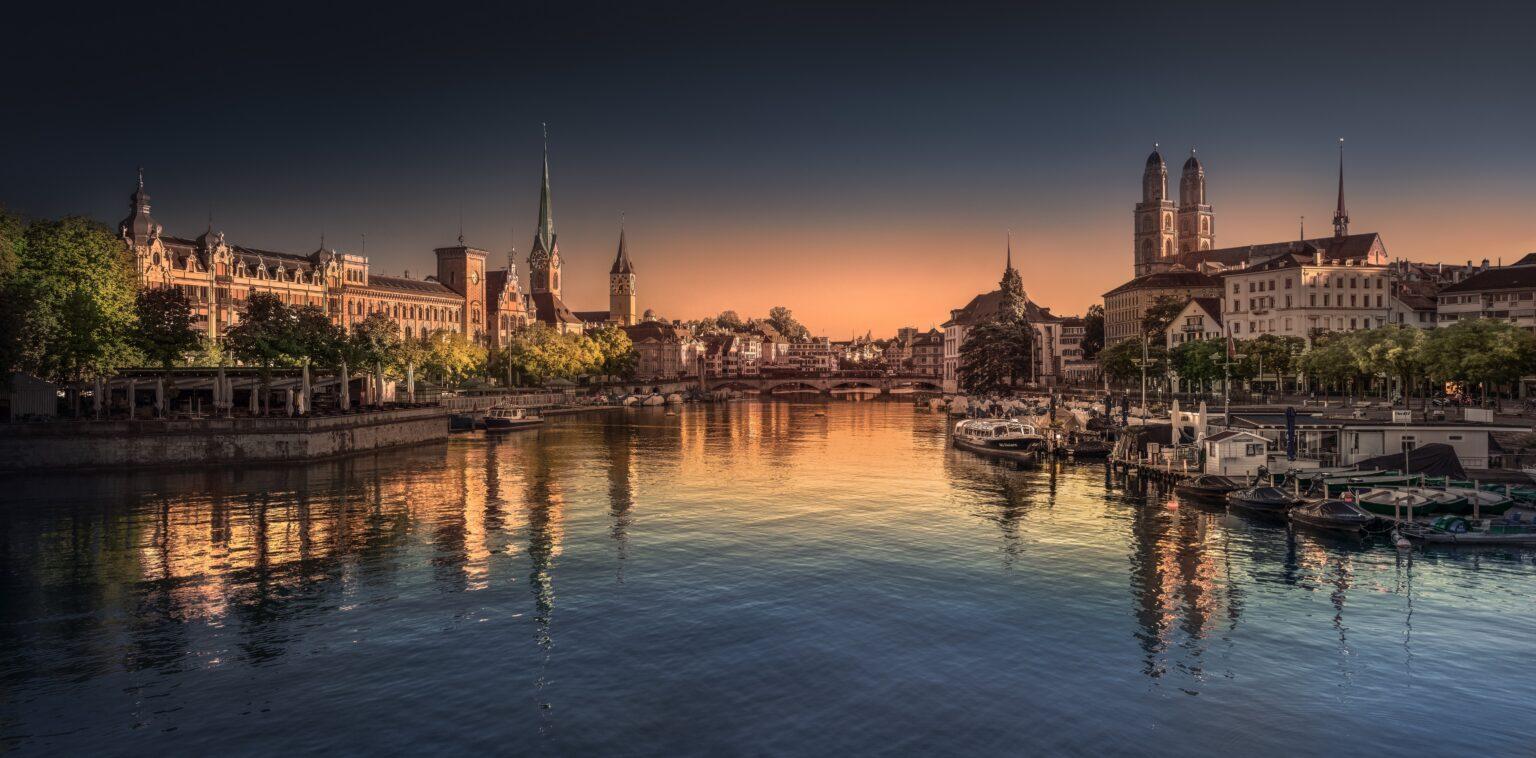
Zurich seems modern: banks, the Bahnhofstrasse, universities. Yet behind the façades of the old town lie more than 2,000 years of history. Knowing it changes the way you see the city. Here are the key moments in brief.
The Romans: Turicum
Around 57/58 BC, the Romans established a customs station called Turicum on what is now the Lindenhof. Goods transported across Lake Zurich and the Limmat were inspected here. The name later became "Zürich".
My tip: today the Lindenhof is a quiet square with a lovely view over the old town and the Limmat.
The Middle Ages: the Fraumünster and a free city
In 853, King Louis the German founded the Fraumünster for his daughter Hildegard. For centuries the abbey was the centre of the city.
In 1218 Zurich became a free imperial city. It answered directly to the emperor and largely governed itself.
In 1336 Rudolf Brun took power together with the craftsmen. From then on the guilds, the associations of craftsmen, held a permanent place on the council. Their guildhalls along the Limmat can still be seen today.
1351: Zurich joins the Confederation
In 1351 Zurich joined the Swiss Confederation as its sixth member, 60 years after the Confederation was founded. With this, Zurich became part of what is now Switzerland.
The Reformation: Zwingli and the Grossmünster
In the 16th century, Huldrych Zwingli became the people's priest at the Grossmünster. From there he began the Reformation, which spread throughout German-speaking Switzerland.
After the Reformation, many religious refugees came to Zurich. They brought knowledge and craftsmanship with them, and the city developed into an important trading centre.
The 19th century: industry, railway and university
In the 19th century, industrialisation transformed Zurich. A city of craftsmen became a centre of mechanical engineering.
- 1847: The first railway in Switzerland runs from Zurich to Baden, the "Spanisch-Brötli-Bahn".
- 1855: The Federal Polytechnic School is founded, today's ETH Zurich.
In this way Zurich laid the foundation for its role as a city of transport, commerce and knowledge.
Zurich today
Today around 90 percent of people in Zurich work in the service sector. Old factory halls have become restaurants, galleries and shops, for example in Zürich-West. Zurich is the largest city in Switzerland.
Discovering history on foot
The beauty of Zurich is that almost all the places in this article lie close together. You can reach the Lindenhof, the Fraumünster, the Grossmünster and the guildhalls in a short walk through the old town.
Would you like to experience Zurich's history with a guide in Arabic? I would be glad to show you the old town in person. Write to me on WhatsApp: +41 76 450 11 28.